Tanzania
What the source says
Referenced, awaiting primary-source reviewAdopted 30 June 1964. Green alludes to the natural vegetation and rich agricultural resources; black represents the Swahili people who are native to Tanzania; blue epitomizes the Indian Ocean, as well as the nation's numerous lakes and rivers; the gold stripes stand for Tanzania's mineral wealth. The green and black colours from the flag of Tanganyika were retained along with the blue from Zanzibar's flag.
Referenced, not verified: a secondary work states this, and the document that constitutes the flag has not been read for this entry. What the marks mean.
Colors and meaning
Symbolism and history(r1)
A black diagonal band fimbriated in yellow splits green and blue triangles, amalgamated in 1964 by retaining the green and black of Tanganyika's flag along with the blue of Zanzibar's when the two united to form Tanzania.
Most similar flags
The 6 closest of the 194 other national flags, ranked by a similarity index computed from the flag images themselves. The number is that index, 0–100 — not a claim that the two flags are “X% identical”.
 Jamaica77
the same colours in similar amounts.
 Saint Kitts and Nevis76
the same colours in similar amounts.
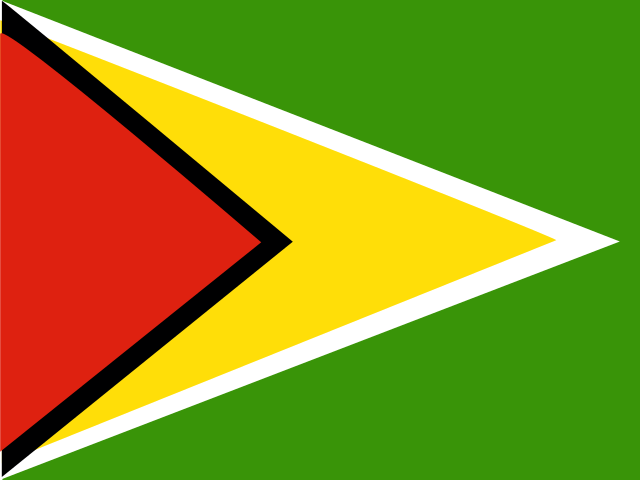 Guyana62
similar colours in a different arrangement.
 Zimbabwe62
similar colours in a different arrangement.
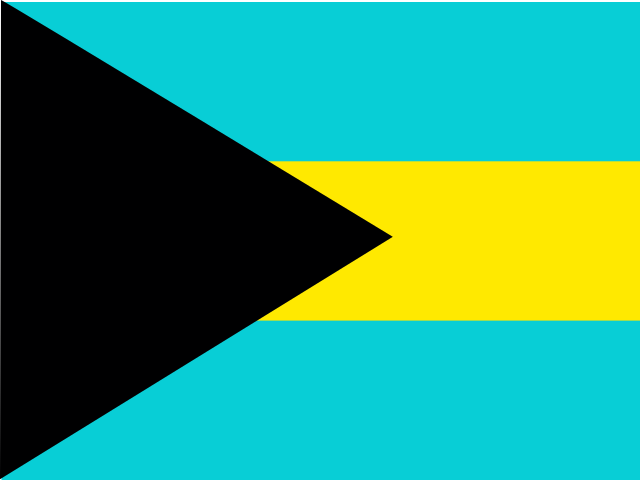 Bahamas61
similar colours in a different arrangement.
 Antigua and Barbuda60
similar colours in a different arrangement.
Computed at build time: each flag is rasterised to 64x48, and the score is 0.55 × colour overlap + 0.45 × structure. A different weighting would rank these differently. How the index works.
References — not verification
(r1) Referenced to Flag of Tanzania (Wikipedia (English)) on 2026-07-17. States the adoption year, which colors the flag has, what the colors mean and the symbolism and history on this page. The passage it states them in is quoted at the top of this entry.
Further reading: Flag of Tanzania on Wikipedia