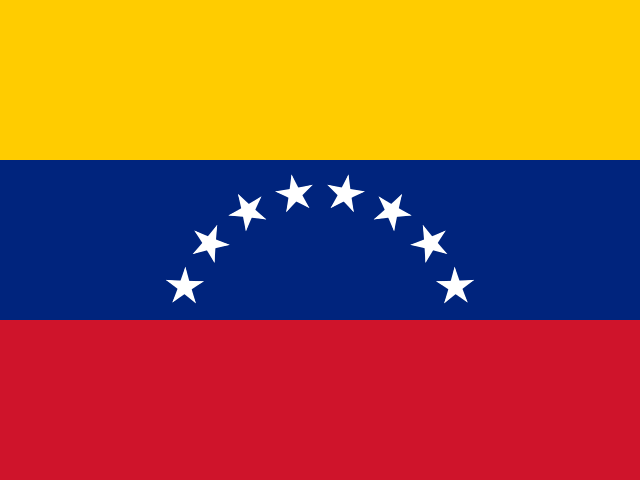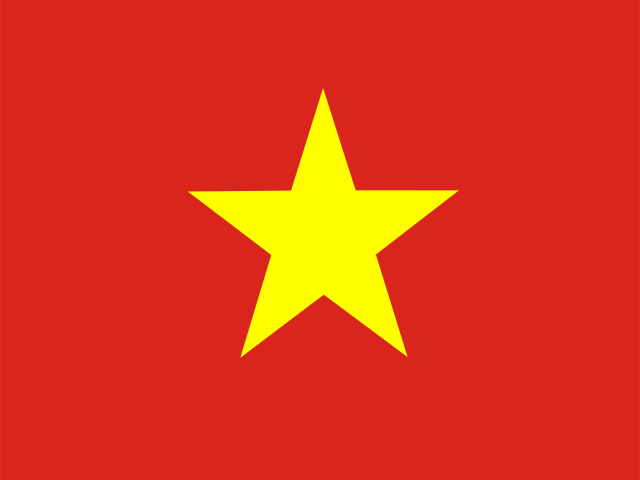
South Korea
What the source says
Referenced, awaiting primary-source reviewOn 12 July 1948, the Constituent National Assembly adopted the taegukgi as the national flag. The color [white] represents peace and purity. The circle in the flag's center symbolizes harmony [...] the blue half represents negative energy (Yin), and the red half represents the positive energy (Yang). Together, the [four] trigrams represent movement and harmony as fundamental principles.
Referenced, not verified: a secondary work states this, and the document that constitutes the flag has not been read for this entry. What the marks mean.
Colors and meaning
Symbolism and history(r1)
A red-and-blue taegeuk circle, symbolising harmony in the world through the balance of yin and yang, sits at the center of a white field surrounded by four black trigrams that together represent movement and harmony, adopted in 1948.
Most similar flags
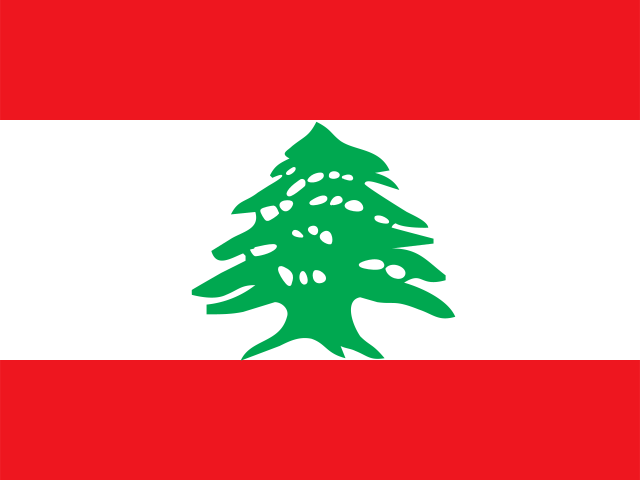
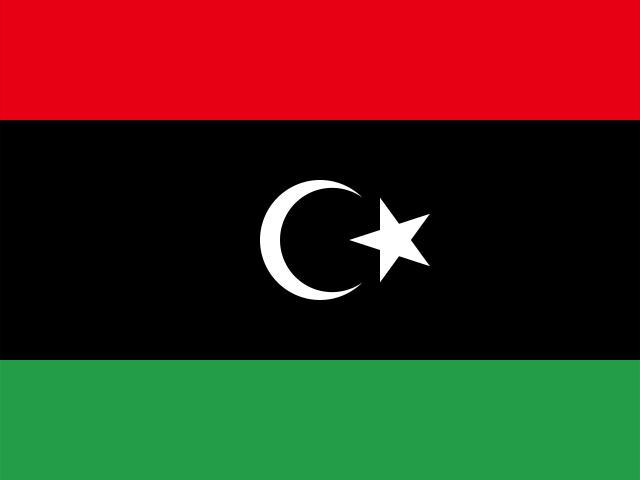
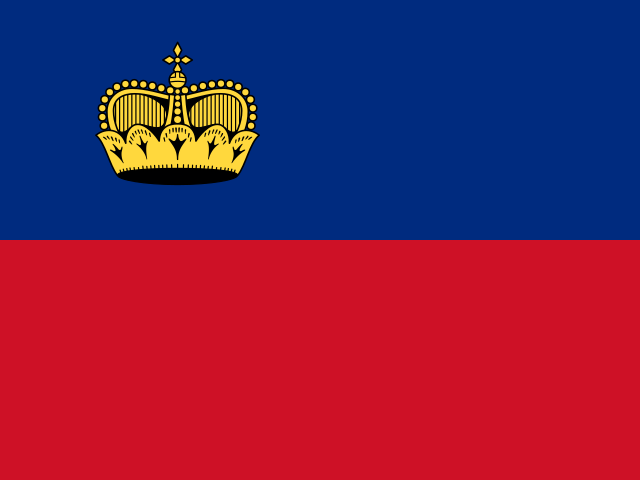
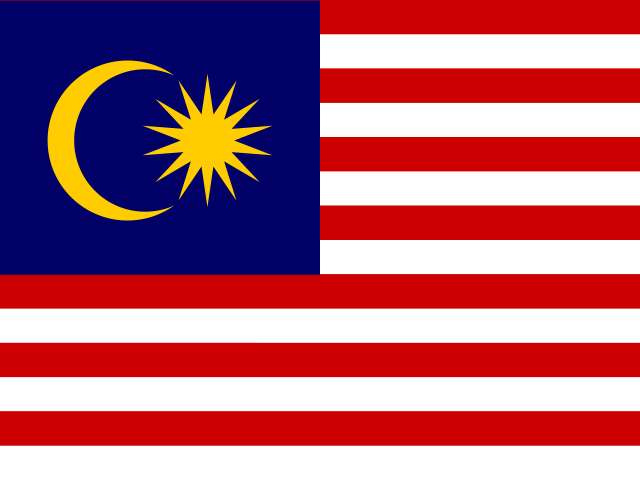
The 6 closest of the 194 other national flags, ranked by a similarity index computed from the flag images themselves. The number is that index, 0–100 — not a claim that the two flags are “X% identical”.
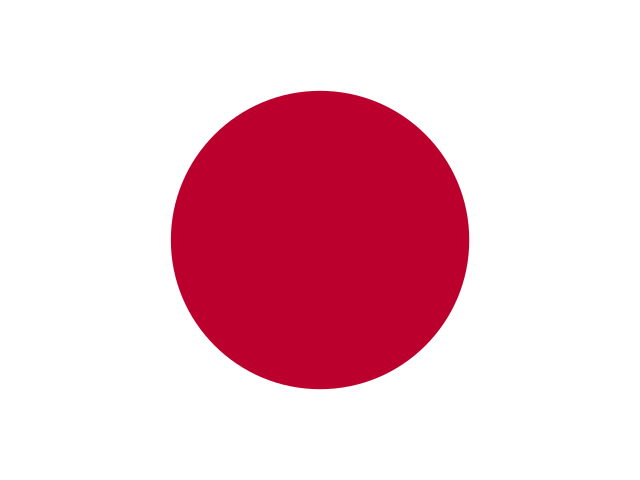 Japan87
the same colours in similar amounts.
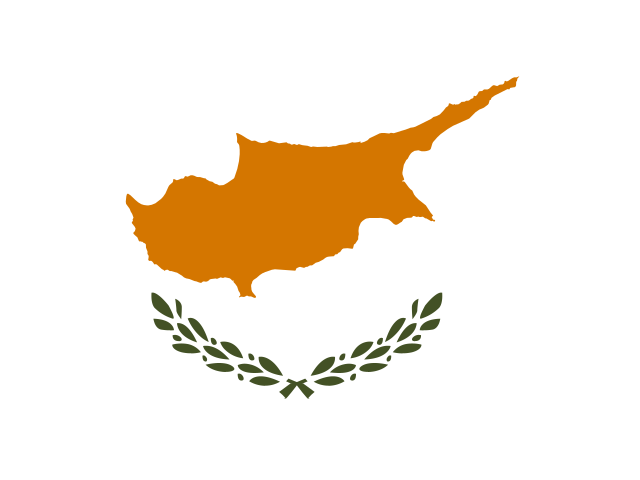 Cyprus84
the same colours in similar amounts.
 Georgia77
the same colours in similar amounts.
 Finland74
the same colours in similar amounts.
 Panama67
similar colours in a different arrangement.
 United Kingdom65
similar colours in a different arrangement.
Computed at build time: each flag is rasterised to 64x48, and the score is 0.55 × colour overlap + 0.45 × structure. A different weighting would rank these differently. How the index works.
References — not verification
(r1) Referenced to Flag of South Korea (Wikipedia (English)) on 2026-07-17. States the adoption year, which colors the flag has, what the colors mean and the symbolism and history on this page. The passage it states them in is quoted at the top of this entry.
Further reading: Flag of South Korea on Wikipedia