Angola
What the source says
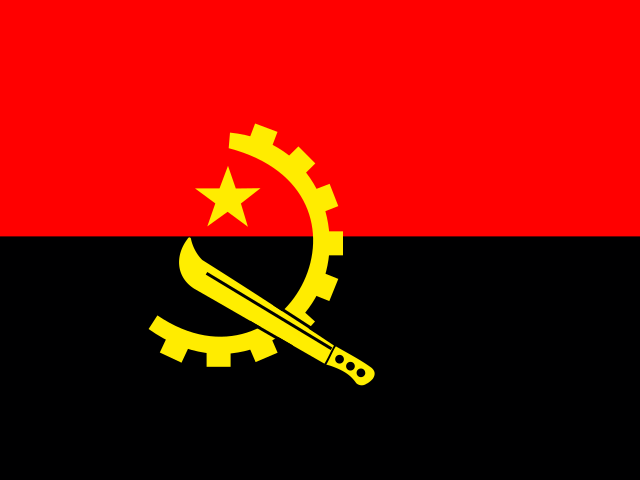
Referenced, awaiting primary-source reviewAdopted 11 November 1975, when Angola became independent from Portugal. Red represents the blood shed by Angolans during the colonial period, the war of independence and in defence of the country; black represents Africa. The machete represents peasants, agriculture, and the war of independence; the half-cogwheel represents workers and industry; the five-pointed star represents international solidarity and progress. [Whitney Smith notes] the charge is similar to the star, hammer and sickle of the Soviet flag.
Referenced, not verified: a secondary work states this, and the document that constitutes the flag has not been read for this entry. What the marks mean.
Colors and meaning
Symbolism and history(r1)
A yellow emblem combining a half-cogwheel (workers and industry), a machete (peasants, agriculture and the war of independence) and a star (international solidarity and progress) sits left of center; the vexillologist Whitney Smith noted the charge is similar to the star, hammer and sickle of the Soviet flag.
Most similar flags
The 6 closest of the 194 other national flags, ranked by a similarity index computed from the flag images themselves. The number is that index, 0–100 — not a claim that the two flags are “X% identical”.
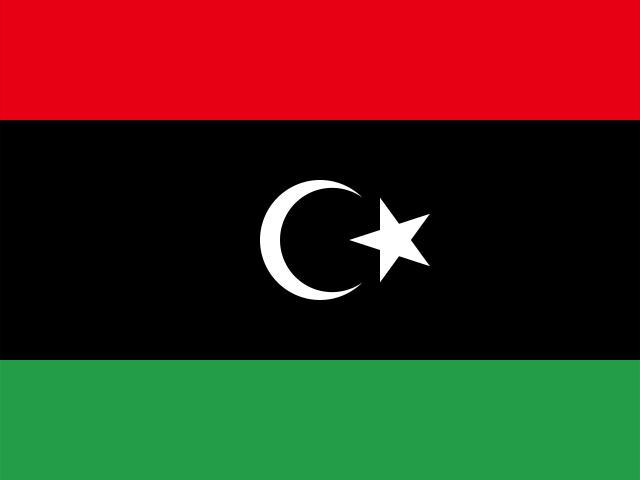 Libya79
the same horizontal band layout; the same colours in similar amounts.
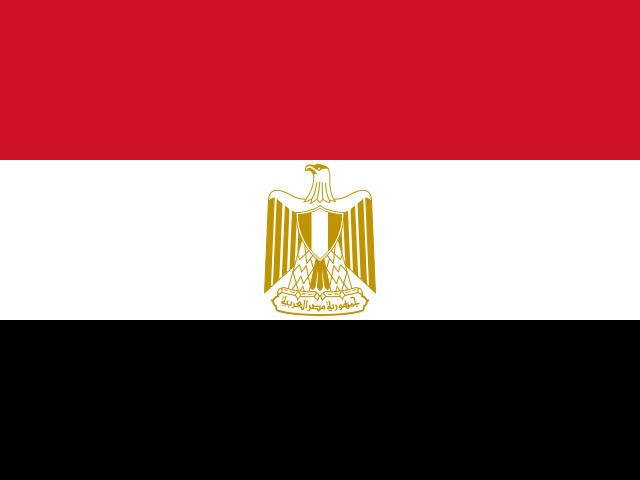 Egypt76
the same horizontal band layout; the same colours in similar amounts.
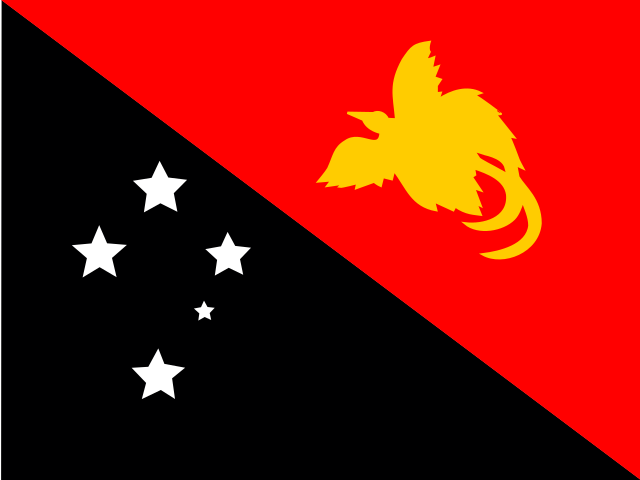 Papua New Guinea76
near-identical colour proportions.
 Yemen76
the same horizontal band layout; the same colours in similar amounts.
 Iraq75
the same horizontal band layout; the same colours in similar amounts.
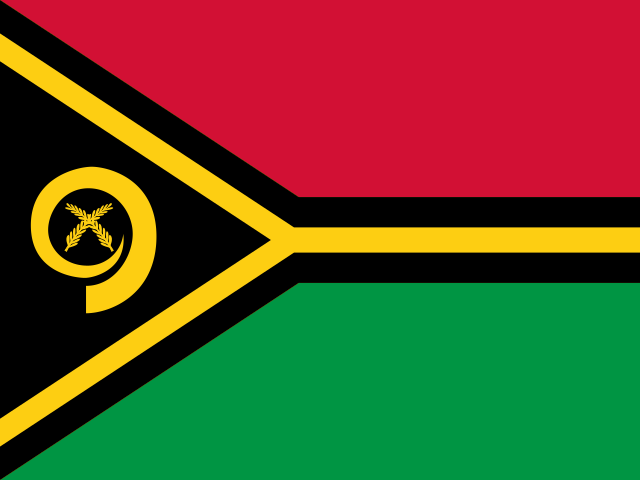 Vanuatu74
the same horizontal band layout; the same colours in similar amounts.
Computed at build time: each flag is rasterised to 64x48, and the score is 0.55 × colour overlap + 0.45 × structure. A different weighting would rank these differently. How the index works.
References — not verification
(r1) Referenced to Flag of Angola (Wikipedia (English)) on 2026-07-17. States the adoption year, which colors the flag has, what the colors mean and the symbolism and history on this page. The passage it states them in is quoted at the top of this entry.
Further reading: Flag of Angola on Wikipedia