Guinea-Bissau
What the source says
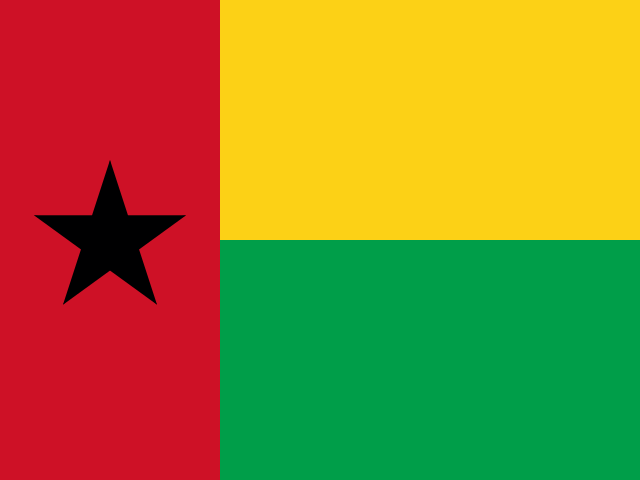
Referenced, awaiting primary-source reviewAdopted on 24 September 1973. The black star symbolises the leadership of the PAIGC, with its colour representing the people of Africa; green [represents] hope; red represents bloodshed in the revolution; yellow [is] sometimes reported to represent the Sun. Almost identical to the flag of the African Party for the Independence of Guinea and Cape Verde; Cape Verde adopted a flag similar to the PAIGC flag upon its independence.
Referenced, not verified: a secondary work states this, and the document that constitutes the flag has not been read for this entry. What the marks mean.
Colors and meaning
Symbolism and history(r1)
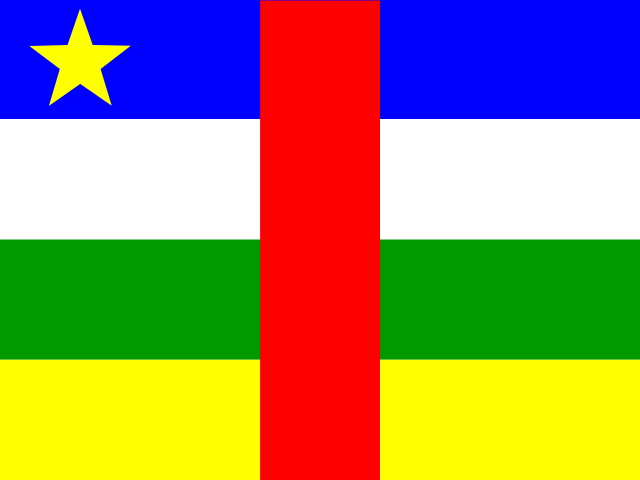
A red vertical band at the hoist bears a black five-pointed star for the leadership of the PAIGC, its colour representing the people of Africa, alongside horizontal yellow-over-green bands; the design is almost identical to the PAIGC flag, a version of which Cabo Verde also used until 1992.
Most similar flags
The 6 closest of the 194 other national flags, ranked by a similarity index computed from the flag images themselves. The number is that index, 0–100 — not a claim that the two flags are “X% identical”.
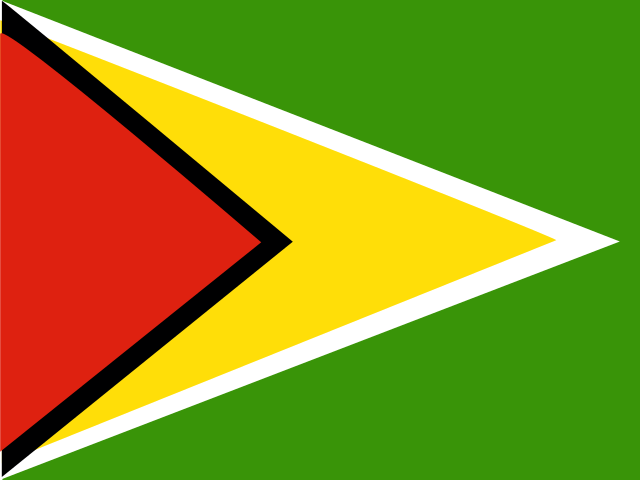 Guyana79
the same colours in similar amounts.
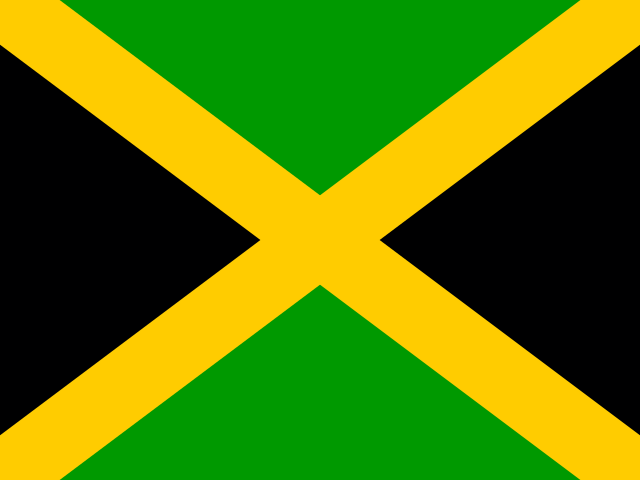 Jamaica75
the same colours in similar amounts.
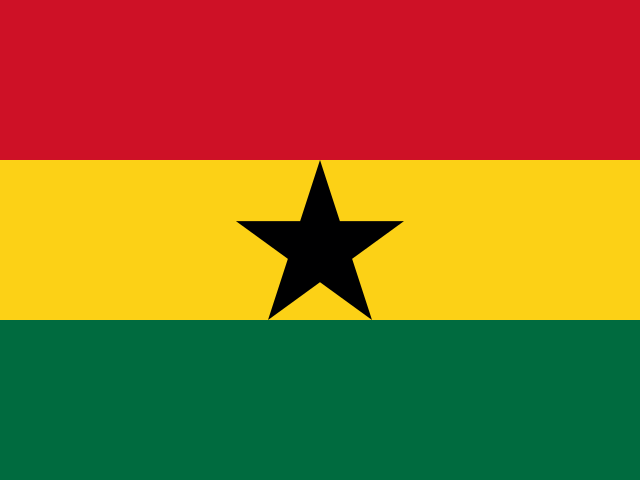 Ghana74
near-identical colour proportions.
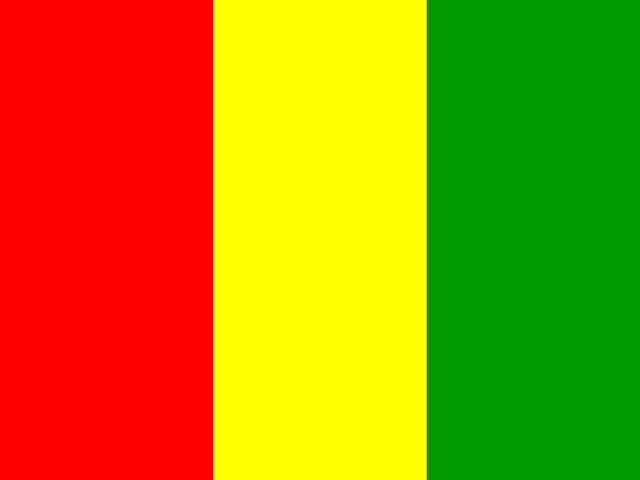 Guinea74
near-identical colour proportions.
 Lithuania74
near-identical colour proportions.
 Zimbabwe74
the same colours in similar amounts.
Computed at build time: each flag is rasterised to 64x48, and the score is 0.55 × colour overlap + 0.45 × structure. A different weighting would rank these differently. How the index works.
References — not verification
(r1) Referenced to Flag of Guinea-Bissau (Wikipedia (English)) on 2026-07-17. States the adoption year, which colors the flag has, what the colors mean and the symbolism and history on this page. The passage it states them in is quoted at the top of this entry.
Further reading: Flag of Guinea-Bissau on Wikipedia