- Capital
- Paris
- Continent
- Europe
- Flag adopted
- 1794
- Designer
- Not individually credited
France
What the source says
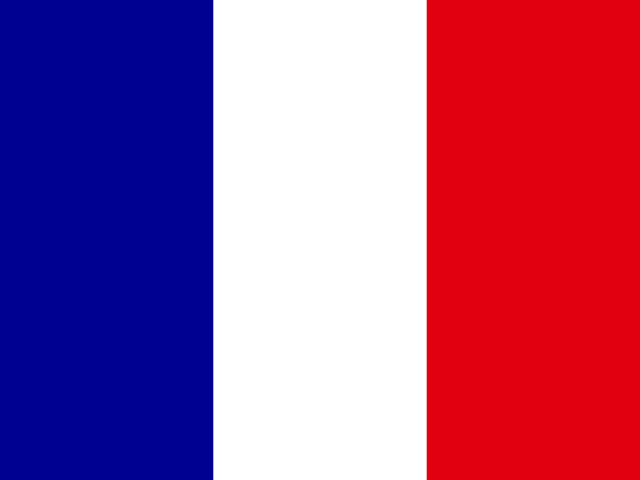
Checked against the constituting documentL'emblème national est le drapeau tricolore, bleu, blanc, rouge.
Checked means compared against the quoted text, not read by a person. What the marks mean.
Colors
What the law specifies[1]
Article 2 of the Constitution of 4 October 1958 states, in full: "L'emblème national est le drapeau tricolore, bleu, blanc, rouge." It names the national emblem as the blue, white and red tricolour flag, and fixes nothing further: no proportions, no shades, and no meanings for the colours.
Symbolism and history
The blue-white-red vertical tricolor, born from the cockade colors of the 1789 Revolution, was a scheme later adopted by many other nations in Europe and elsewhere.
Most similar flags
The 6 closest of the 194 other national flags, ranked by a similarity index computed from the flag images themselves. The number is that index, 0–100 — not a claim that the two flags are “X% identical”.
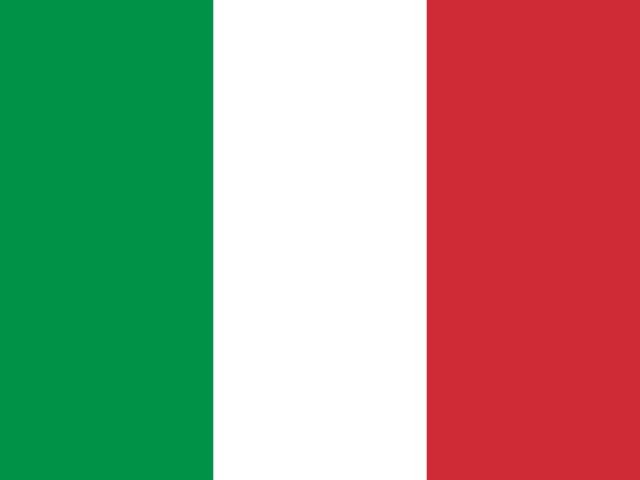 Italy79
the same vertical band layout; the same colours in similar amounts.
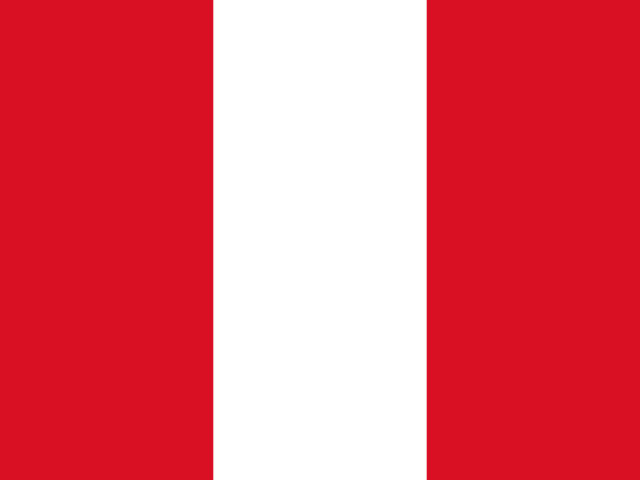 Peru78
the same vertical band layout; the same colours in similar amounts.
 Chad76
the same vertical band layout; the same colours in similar amounts.
 Romania76
the same vertical band layout; the same colours in similar amounts.
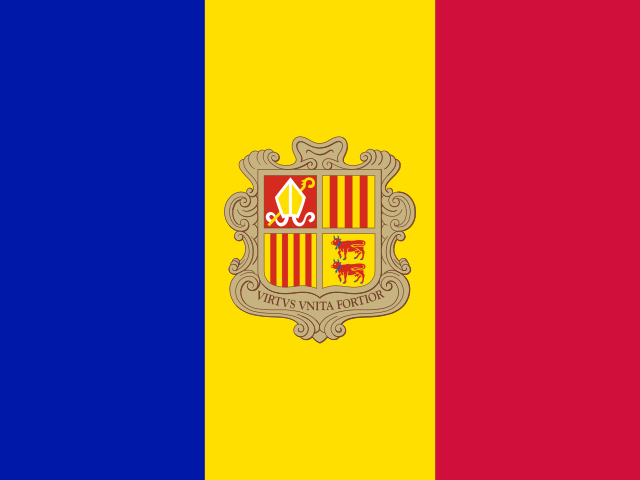 Andorra75
the same vertical band layout; the same colours in similar amounts.
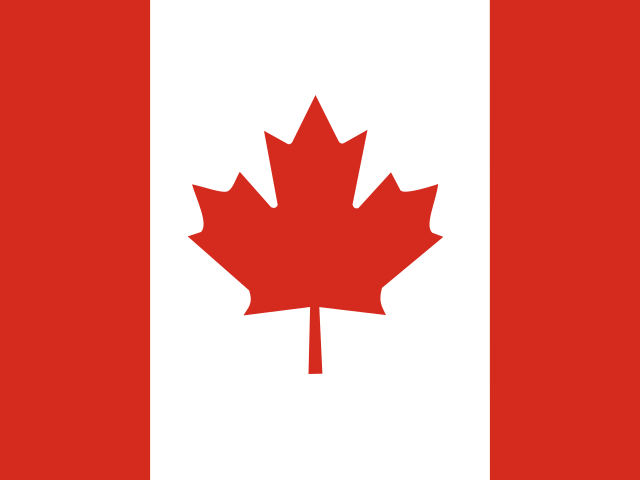 Canada75
the same vertical band layout; the same colours in similar amounts.
Computed at build time: each flag is rasterised to 64x48, and the score is 0.55 × colour overlap + 0.45 × structure. A different weighting would rank these differently. How the index works.
Sources
[1] Verified against Constitution du 4 octobre 1958, Article 2 (Conseil constitutionnel) on 2026-07-18. Backs which colors the flag has and the description of the design on this page. The passage it was checked against is quoted at the top of this entry.
Further reading: Flag of France on Wikipedia