Fiji
What the source says
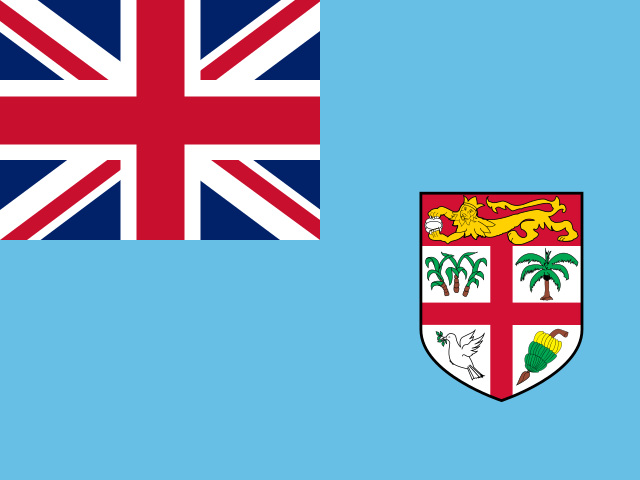
Referenced, awaiting primary-source reviewAdopted 10 October 1970. The flag's bright blue background symbolises the Pacific Ocean, which plays an important part in the lives of the islanders, both in terms of the fishing industry, and the huge tourist trade. The shield displays a British lion holding a cocoa pod, sugar cane, a coconut palm, a dove of peace, and bananas. The Union Jack appears in the canton.
Referenced, not verified: a secondary work states this, and the document that constitutes the flag has not been read for this entry. What the marks mean.
Colors and meaning
Symbolism and history(r1)
A Union Jack canton sits above a bright blue field bearing the Fijian shield on the fly, whose quarters show a British lion holding a cocoa pod, sugar cane, a coconut palm, a dove of peace and bananas, retained at independence in 1970.
Most similar flags
The 6 closest of the 194 other national flags, ranked by a similarity index computed from the flag images themselves. The number is that index, 0–100 — not a claim that the two flags are “X% identical”.
 Saint Lucia73
the same colours in similar amounts.
 Argentina58
the same colours in similar amounts.
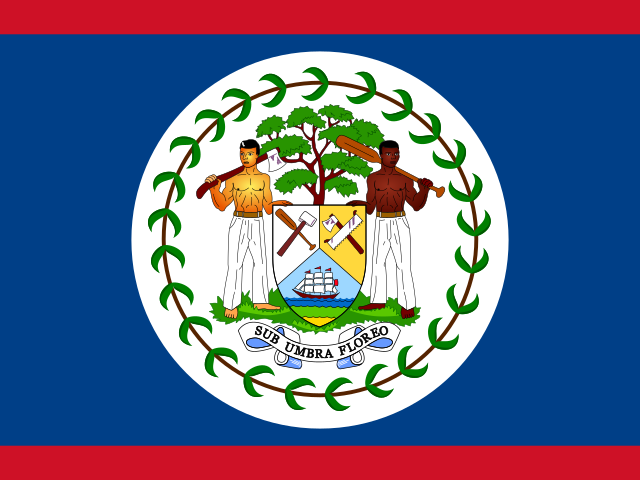 Belize55
both carry a central emblem.
 United Kingdom50
a similar overall colour and layout.
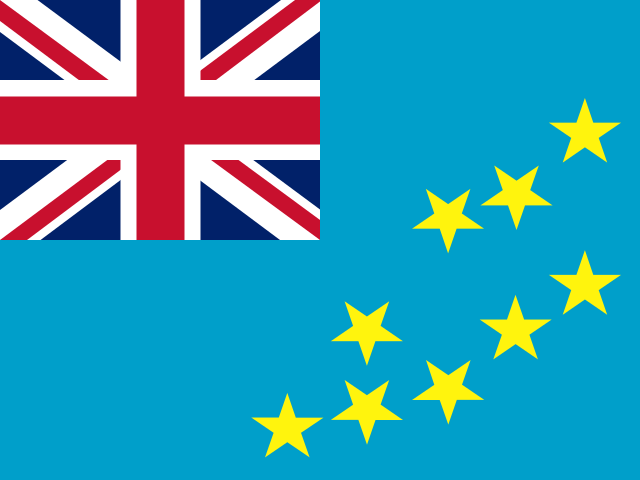 Tuvalu49
a similar overall colour and layout.
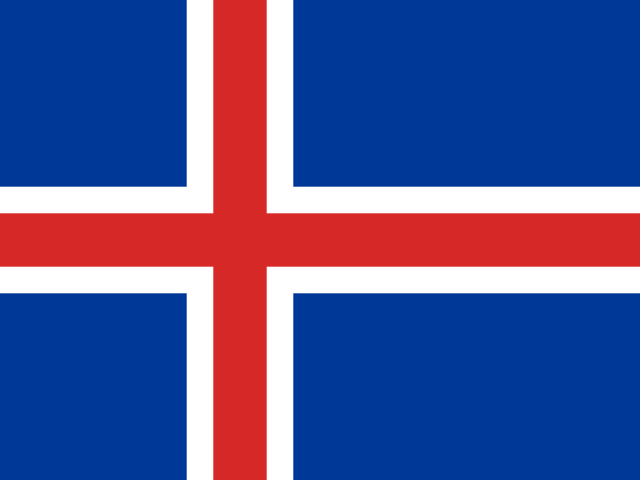 Iceland48
a similar overall colour and layout.
Computed at build time: each flag is rasterised to 64x48, and the score is 0.55 × colour overlap + 0.45 × structure. A different weighting would rank these differently. How the index works.
References — not verification
(r1) Referenced to Flag of Fiji (Wikipedia (English)) on 2026-07-17. States the adoption year, which colors the flag has, what the colors mean and the symbolism and history on this page. The passage it states them in is quoted at the top of this entry.
Further reading: Flag of Fiji on Wikipedia